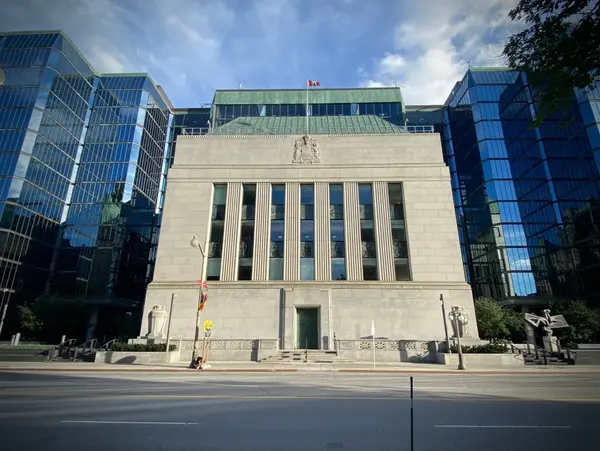
Bank of Canada Hikes Rates to 2.50% — The First Increase in Over a Year. What It Means for Fraser Valley Buyers
After holding steady for nearly a full year, the Bank of Canada has finally made its move — and it’s the one many buyers had been hoping wouldn’t come. On October 28, 2026, the Bank raised its benchmark interest rate for the first time since before the long series of 2026 holds. For anyone buying, selling, or carrying a mortgage in the Fraser Valley, here’s a clear breakdown of what happened and what it means.
The Decision
The Bank of Canada raised its overnight rate by 25 basis points (a quarter of a percentage point) to 2.50 per cent, up from the 2.25 per cent level it had held since October 2025. The Bank Rate now sits at 2.75 per cent. The next scheduled announcement is December 9, 2026.
This marks a genuine turning point. Through the first several decisions of 2026, the Bank held firm at 2.25 per cent, repeatedly choosing to look through inflation driven by the oil shock from the war in the Middle East. That patience has now run out.
Why Did the Bank Finally Hike?
The short answer: the oil-driven inflation the Bank had been willing to tolerate started showing signs of spreading — exactly the scenario Governor Tiff Macklem had been warning about for months.
The pressures that tipped the decision include energy costs that stayed elevated, with gasoline prices running sharply higher than a year earlier, and oil reportedly pushing toward the $115 range. The Bank’s own business surveys showed rising inflation expectations, suggesting the energy shock was beginning to feed into how businesses and consumers think about future prices. When inflation expectations start to climb, central banks act to prevent them from becoming self-fulfilling.
It’s worth remembering the context: for most of 2026, a soft Canadian labour market kept underlying inflation in check, which is why the Bank could hold. The September jobs report showed continued weakness, with employment falling and unemployment at 6.5 per cent. But the Bank evidently judged that the inflation risk from persistent high energy prices now outweighed the case for continuing to support a soft economy.
What This Means for Mortgages
For variable-rate mortgage holders, this is the first payment pressure in a long time. A 25-basis-point increase translates to roughly $30 to $50 more per month per $250,000 of mortgage, depending on your specific terms. If you’re on a variable rate, it’s worth checking with your mortgage broker on how your payment or amortization is affected.
For those shopping for a fixed-rate mortgage, the picture is more nuanced. Fixed rates are tied to bond yields, which had already been pricing in the possibility of this hike. The bigger question is what comes next — if markets expect further increases, fixed rates could drift higher; if this is seen as a one-and-done move, they may hold.
For buyers who have been waiting on the sidelines for rate cuts, this is the clearest signal yet that cuts are not coming in the near term. The direction of travel has reversed, at least for now.
What This Means for the Fraser Valley Market
Here’s the important perspective: a single quarter-point hike does not, by itself, transform a housing market. The Fraser Valley has been in a deep buyer’s market all year — as our most recent FVREB update showed, prices are down about 7 per cent year-over-year, the single-family benchmark sits roughly $460,000 below its 2022 peak, and inventory remains well above seasonal norms. None of that changes overnight because of 25 basis points.
That said, the psychology matters. For much of 2026, the story buyers told themselves was “I’ll wait for rates to drop, then buy.” This hike removes that premise. The question now shifts from “when will rates fall?” to “what if they don’t — or rise further?”
For buyers who are financially ready, that reframing actually strengthens the case to act in today’s market rather than waiting. Consider the full picture: prices are near what forecasters expect to be a floor, inventory and choice are abundant, and the hoped-for rate relief has just been pushed further out. Waiting for lower rates that may not materialize — while competing against more buyers if they eventually do — is a riskier strategy than buying well in a soft market now.
For sellers, higher borrowing costs are a modest headwind on buyer demand, which reinforces the same message we’ve been repeating all year: price to today’s market, not yesterday’s. Buyers have leverage, financing just got slightly more expensive, and realistic pricing is what closes deals.
The Bottom Line
The Bank of Canada’s hike to 2.50 per cent closes the book on a year of holds and signals that the era of waiting for rate cuts is, for now, over. For the Fraser Valley, the fundamentals remain buyer-friendly — soft prices, high inventory, and room to negotiate — but the calculus for buyers on the fence has shifted. The “wait for cuts” strategy just lost its footing, which makes the case for acting decisively in today’s market stronger than it’s been all year.
I’m not a mortgage broker or financial advisor, so for decisions about locking a rate or choosing fixed versus variable, talk to a licensed mortgage professional. But if you’d like to work through what this rate change means for a purchase or sale you’re weighing in the Fraser Valley, reach out — I’m always happy to help.
Categories
Recent Posts