Carney and Eby's BC Housing Plan: What the Condo Conversion Deal Means for Fraser Valley Buyers
A major housing announcement out of Ottawa and Victoria is generating serious debate across BC — and it has direct implications for buyers, sellers, and investors in the Fraser Valley and Lower Mainland. Here's what was announced, what the critics are saying, and what it actually means on the ground.
What Was Announced?
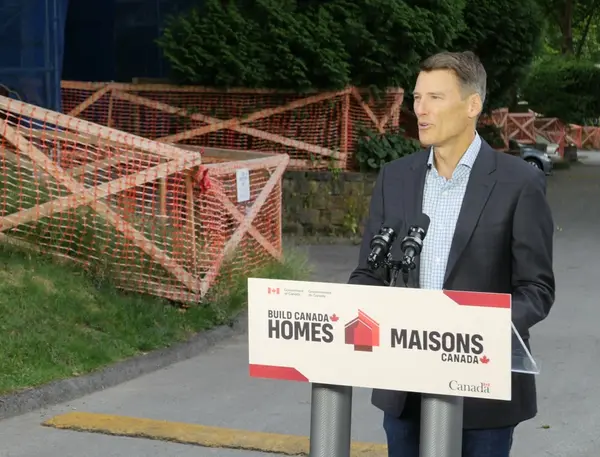
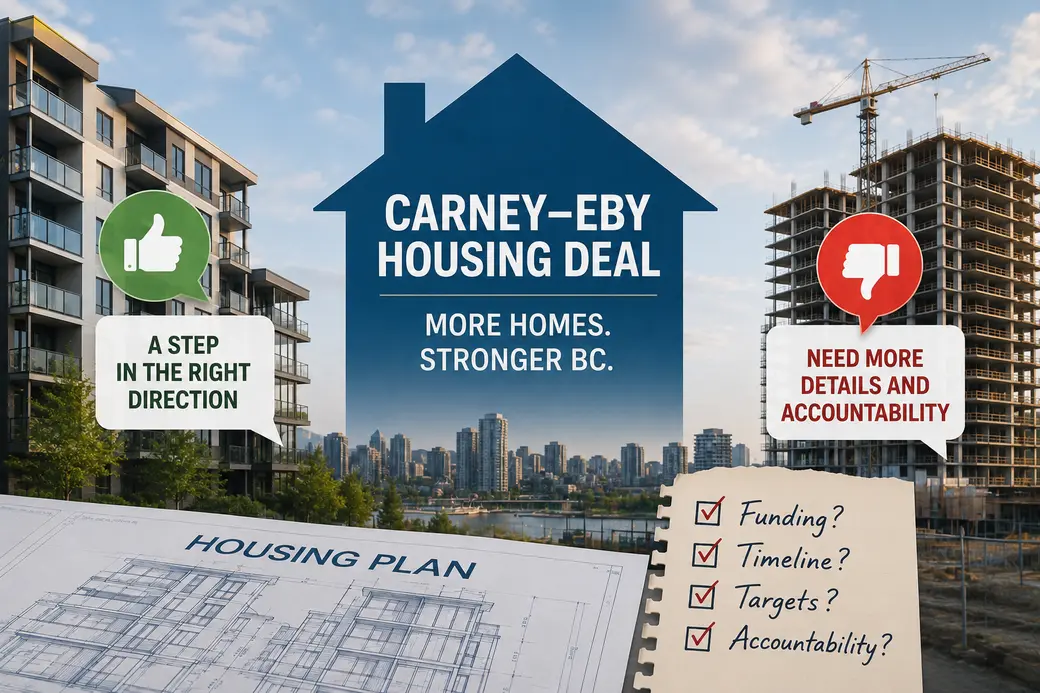
On June 18, Prime Minister Mark Carney and BC Premier David Eby unveiled a Canada-BC partnership promising up to $3.2 billion over 10 years to lower development charges for multi-unit housing by up to 50 per cent in priority communities, alongside a plan to use innovative financing tools to convert more than 2,200 vacant condo units in priority growth areas into affordable homes.
The two pillars of the deal are: cut the fees developers pay to municipalities, and have the government step in to buy up unsold completed condos and convert them into affordable housing.
Carney later clarified that the federal government would contribute roughly 10 per cent of the approximately $1.45 billion total cost to convert the units, while Eby said the province would roughly match the federal contribution — with the remainder coming from financing.
Why Is There So Much Controversy?
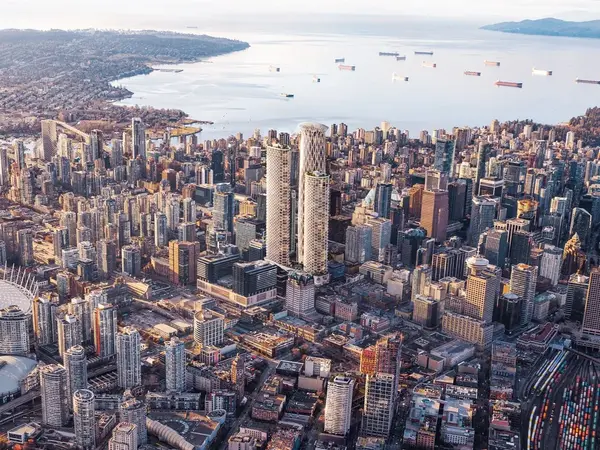
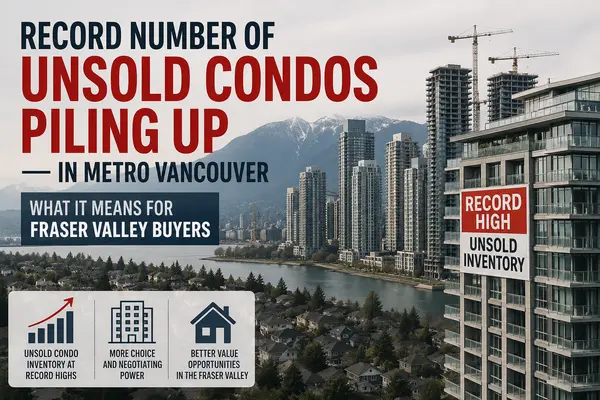
The announcement landed in the middle of an already-heated conversation about BC's record unsold condo inventory. As we covered in a recent post, there were over 4,376 completed and unabsorbed condo units sitting empty across Metro Vancouver as of May 2026 — a 76 per cent jump from the year before. The government's plan to buy a chunk of that inventory and convert it to affordable housing immediately drew fire from multiple directions.
Manraj Dosanjh, a real estate advisor with Dexter Realty, acknowledged that the government purchasing more than 2,200 units has created a lot of negative sentiment online. Critics — including federal Conservative Leader Pierre Poilievre — quickly labelled it a developer bailout.
But Dosanjh pushed back on that framing. He pointed out that the plan gives the government a ready, completed product they can put into the market quickly. "It kind of gives them a little fast track instead of having to go and develop their own highrise buildings," he said.
He also flagged a concern that doesn't get enough attention: while supply is high right now, future supply is falling off a cliff — and a lack of action today puts housing delivery in 2028, 2029, and 2030 at serious risk.
What Do Developers Think?
The reaction from the development side is cautiously optimistic, but full of unanswered questions. Jonathan Meads, vice-president with StreetSide Developments, said it's unclear whether development charge reductions will be applied at the Metro Vancouver Regional District level or the municipal level, and if the latter, which municipalities will benefit and by how much — noting the meaning of "priority communities" remains vague.
Meads also flagged a double-edged sword effect: if DCC reductions make future projects cheaper to build, that new product will sell faster — making existing inventory even harder to move. "You end up being left with your longstanding inventory," he said.
Still, every dollar saved on development costs gets passed to buyers. "Every penny we can find the saving in, we are passing back to the homeowners. There's not a lot of buyers out there today, so every buyer that I can get, if I can give them $30,000 back tomorrow, I will," Meads said.
What Do Academics and Economists Think?
The academic reaction is more divided. Thomas Davidoff, a professor of real estate finance at UBC Sauder, said the conversion of condos into rentals could help housing affordability — but questioned whether direct government involvement is necessary, suggesting instead that government could play a coordinating role to bring pension funds and institutional investors to the table.
Andrey Pavlov, a finance professor at SFU Beedie, was more critical, arguing it makes no sense for government to chase away private investment through regulation and taxes, then turn around and spend taxpayer dollars to fill the gap. "It's awful policy," he said, adding that the arrangement ultimately leads to higher taxes and a few government bureaucrats getting to allocate money and make announcements.
The Fraser Valley Connection
Here's the piece that matters most for this market: Premier Eby said the economics of the program do not work for properties within the City of Vancouver — given high construction and land costs — but they do work in other Metro Vancouver markets and the broader Lower Mainland, including the Fraser Valley, Vancouver Island, and the Okanagan.
In other words, the Fraser Valley is explicitly in scope for where these conversions could happen. The plan targets a rent-to-own model aimed at renters who can afford monthly payments but cannot accumulate a down payment — a key obstacle for many looking to transition from renting to homeownership.
Eby acknowledged that the announcement came before the details were fully worked out: "The federal government was enthusiastic about us announcing this before all the details were out. But in the absence of the details, the plot has been lost a little bit here."
What's Still Unknown
The honest answer is: a lot. Five days after the announcement, critical details remained undisclosed — Ottawa has not said how much the condo conversion component will cost per unit, what price it will pay, or whether discounts will be demanded from developers.
What's clear is that the government intends to target distressed condo assets — projects in or near foreclosure — which Eby says means developers won't be profiting from the transactions.
What This Means for Fraser Valley Buyers and Sellers
If you're a buyer in the Fraser Valley, this plan is worth watching. A rent-to-own program targeting people who can afford rent but not a down payment could open a new pathway to ownership that didn't exist before — particularly in markets like Langley, Abbotsford, and Mission where prices are more moderate than Vancouver proper.
If you're a seller or developer with completed inventory sitting unsold, the government stepping in as a potential bulk purchaser — even at discounted rates — may offer a path to offloading units that aren't moving at current retail prices.
If you're a buyer in the resale market, the bigger picture remains the same as before this announcement: supply is elevated, demand is soft, and you have more negotiating power than you've had in years. This policy doesn't change that dynamic overnight.
The next question is when the specific details — purchase prices, eligible municipalities, program eligibility — get released. That's when this announcement goes from political noise to market reality.
If you have questions about how any of this affects your buying or selling plans in the Fraser Valley, reach out — I'm happy to walk through it with you.
Categories
Recent Posts