Record Number of Unsold Condos Piling Up in Metro Vancouver — What It Means for Fraser Valley Buyers
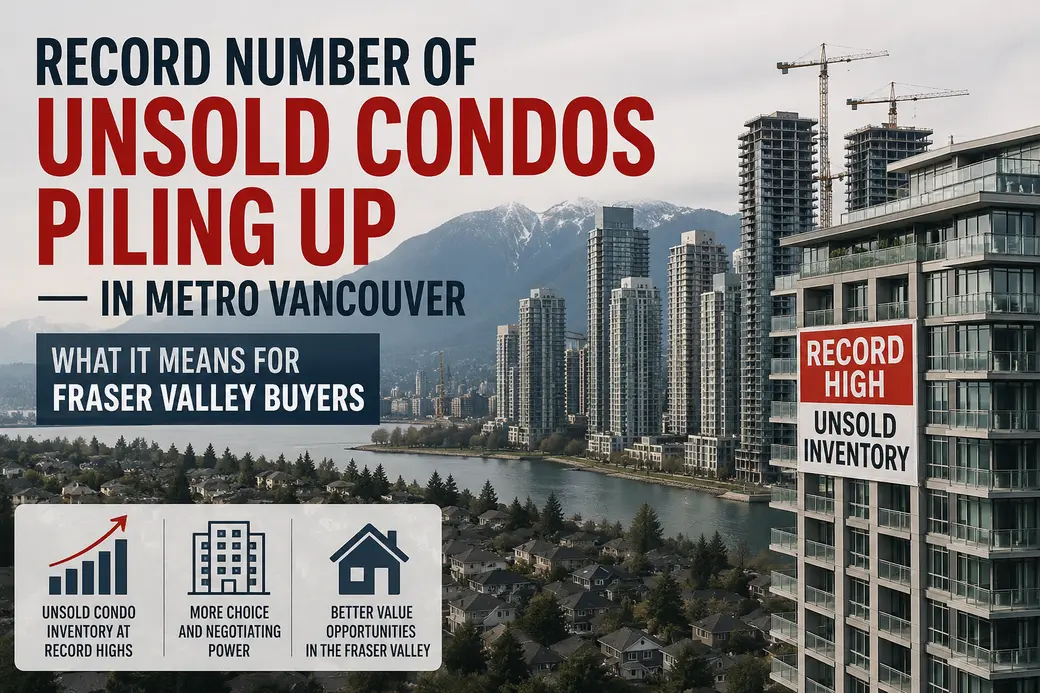
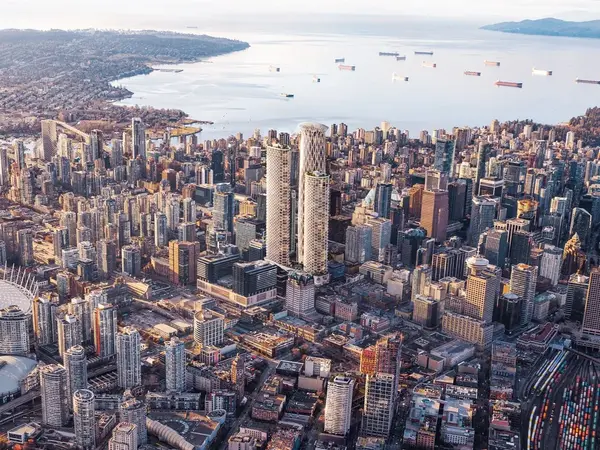
A new report from the Canada Mortgage and Housing Corporation (CMHC) is shining a spotlight on a growing problem in Metro Vancouver's condo market: thousands of brand new units sitting completed but unsold. For buyers and investors watching the Fraser Valley and Greater Vancouver real estate market, the data is worth paying attention to.
What Does "Unabsorbed" Mean?
Before diving into the numbers, it helps to understand the term. CMHC defines an "absorbed" dwelling as one that is completed but unavailable for sale or lease — meaning it's occupied, subject to a binding and non-conditional agreement, or withheld from the market by a developer. Any unit that doesn't meet those criteria is considered "unabsorbed." This includes units where a presale buyer failed to complete their purchase, or where the unit has been switched from sale to rental.
In short: unabsorbed units are finished homes that aren't in anyone's hands yet.
The Numbers Are at Record Highs
According to CMHC, there were 4,376 completed and unabsorbed condo apartments in the Vancouver census metropolitan area in May 2026, compared to 2,488 in May 2025 — an increase of 76 per cent.
CMHC economist Shiva Moshtari Doust confirmed: "We're looking at record-high numbers of unabsorbed units in the Vancouver CMA."
That's not just a CMHC finding, either. Data from Rennie and analytics platform Zonda Home tells a similar story: there were 2,179 completed and unsold homes at the end of 2024, 3,472 at the end of 2025, and 3,945 at the end of Q1 2026.
Where Are These Units Concentrated?
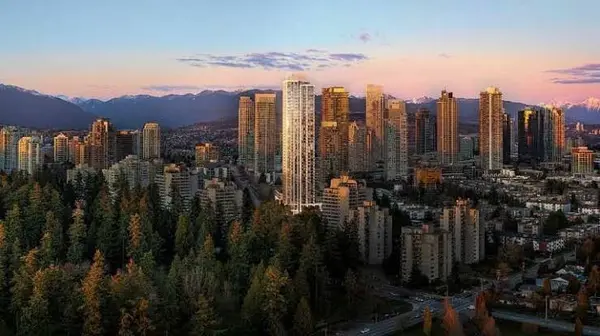
The unsold inventory isn't spread evenly across the region. Burnaby and Richmond together account for 48.9 per cent of the region's completed and unabsorbed condo apartments in May 2026 — reflecting where the bulk of high-density construction and presale activity was concentrated over the past few years.
Andy Yan, director of Simon Fraser University's City Program, noted that the market hasn't seen unabsorbed numbers this high since the mid-1990s.
Why Is This Happening?
CMHC's Moshtari Doust pointed to a surge of housing starts from a few years ago that are now completing, while demand has softened due to slow population growth, low buyer confidence, lower rents pulling would-be buyers toward renting instead of purchasing, and higher interest rates making financing more expensive. "Supply is high and demand is low," she said.
It's a textbook supply-demand mismatch — but with a twist. The issue isn't just that there's too much supply. It's that the supply being delivered may not match what most buyers can actually afford.
SFU's Yan put it bluntly: "It's housing for whom? While we are able to build certain types of units, there is a question of who can afford it?" Most households in the region don't have very high incomes, highlighting what some say is a need for the right kind of supply.
Yan described a stalemate between developers' asking prices and the capacity of prospective buyers struggling with affordability, financing access, and job stability.
What Happens Next?
Ryan Berlin, Rennie's chief economist, said if recent trends continue, the number of unabsorbed units could grow to around 5,000 by 2030. "It's certainly not a doomsday scenario, but it does reflect the reality that we have thousands of unsold homes in buildings that are under construction and that will be delivered at some point in the next four years," he said.
One potential wildcard: Berlin mentioned "take-out buyers" — funds or developers that purchase unsold inventory in bulk, either pulling it off the market or converting it to rental. "We're starting to see a little bit of that in Toronto. If that happens here, because it hasn't yet, then you could see these headline numbers change dramatically, and specifically reduce," he said.
What This Means for Fraser Valley Buyers and Investors
This data has real implications for anyone watching the lower mainland real estate market:
If you're a buyer, a soft condo market means more negotiating power, particularly in higher-density areas like Burnaby, Richmond, and parts of Surrey. Developers sitting on completed inventory have more motivation to deal.
If you're an investor eyeing presale condos, the data is a reminder that presale risk is real. Units that were purchased on assignment or off-plan are facing completion challenges, and some buyers have walked away — leaving buildings full of unsold inventory.
If you're a seller of resale condos in the region, increased competition from brand-new unsold units is a headwind. Pricing needs to reflect current market realities, not what the market looked like two or three years ago.
For the Fraser Valley specifically, the dynamic is slightly different. The Valley tends to attract buyers seeking more space and better value than what Metro Vancouver condos offer. That relative affordability advantage becomes even more pronounced when condo inventory downtown and in Burnaby/Richmond is sitting unsold.
Bottom Line
The Metro Vancouver condo market is at a pivotal moment. Record unsold inventory, softer demand, and an affordability gap between what's being built and what most buyers can afford is creating a slow-moving correction. Whether that pressure eventually pushes prices down, gets absorbed by institutional buyers, or lingers as a longer-term overhang remains to be seen.
If you're thinking about buying, selling, or investing in the Fraser Valley or Greater Vancouver area, this is exactly the kind of market context that matters. Reach out — I'd be happy to walk you through what it means for your specific situation.
Categories
Recent Posts