Bank of Canada Holds Interest Rate at 2.25%: What It Means for the Housing Market in 2026
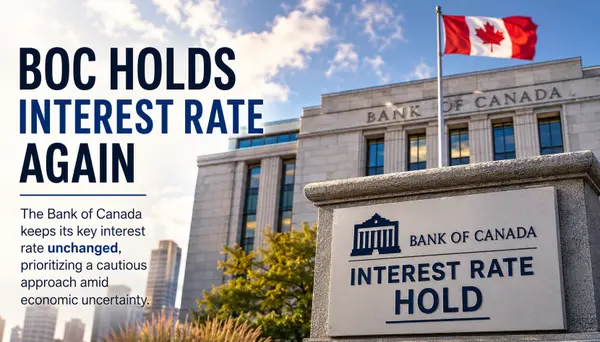
The Bank of Canada has once again held its key interest rate at 2.25%, signaling a cautious approach as global uncertainty—particularly geopolitical conflict—continues to impact inflation and economic growth.
For buyers, sellers, and investors in markets like the Fraser Valley and Metro Vancouver, this decision carries important implications.
Interest Rates Hold Steady — For Now
In its latest announcement, the Bank of Canada confirmed it is maintaining the overnight rate at 2.25%, a level unchanged since late 2025.
This decision reflects a balancing act:
-
The Canadian economy is showing signs of weakness
-
Inflation has recently cooled
-
But new global risks could push prices higher again
The central bank is essentially in a “wait and see” mode.
Inflation Is Cooling — But Risks Are Rising
Canada’s inflation rate recently dropped to around 1.8%, sitting close to the Bank’s 2% target.
However, that progress may be short-lived.
A major concern right now is the ongoing conflict in the Middle East, which has caused oil prices to surge. Rising energy costs are expected to:
-
Increase gasoline prices
-
Push overall inflation higher in the coming months
-
Create uncertainty for future rate decisions
As the Bank noted, these global events have “heightened the risks to the global economy.”
Why This Matters for Real Estate
Interest rates are one of the biggest drivers of real estate activity—especially in high-priced markets like Vancouver and the Fraser Valley.
For Buyers
-
Stable rates mean mortgage costs aren’t rising (for now)
-
Improved affordability compared to peak rate periods
-
More confidence entering the spring market
However, if inflation rises again, future rate hikes are still possible.
For Sellers
-
Stable borrowing costs can help bring buyers back into the market
-
But uncertainty may still keep some buyers on the sidelines
-
Pricing and strategy remain critical in today’s slower market
The Economy Is Showing Signs of Weakness
The Bank of Canada also pointed to a softening Canadian economy, including:
-
Slower economic growth
-
A weakening labour market
-
Rising unemployment (around 6.7%)
This is one of the key reasons the Bank is holding rates steady instead of increasing them.
Could Rates Go Up Again?
While rates are currently on hold, the Bank made it clear that future hikes are still on the table.
If oil prices remain high and inflation rises:
-
The Bank may increase rates later in 2026
-
Markets are already pricing in a potential hike toward the end of the year
On the flip side, if the economy weakens further, rate cuts could also be considered.
What to Expect Moving Into Spring 2026
Heading into the spring market, we’re seeing a unique setup:
-
Stable interest rates
-
Cooling inflation (for now)
-
High uncertainty due to global events
For real estate, this typically translates to:
-
A more balanced or buyer-friendly market
-
Gradual increases in activity (not a surge)
-
Continued sensitivity to economic news
Final Thoughts
The Bank of Canada’s decision to hold rates at 2.25% reflects a delicate balancing act between slowing economic growth and rising inflation risks.
For buyers and sellers in B.C., the takeaway is simple:
👉 Conditions are stable today—but could shift quickly depending on inflation and global events.
Categories
Recent Posts